LEP Welcomes Food and Drink Report’s Focus on Supply Chain Skills
The Greater Lincolnshire Local Enterprise Partnership has welcomed a report published yesterday (Tuesday) by the Food and Drink Sector Council which says that a supply chain focus for skills is needed to help the food and drink industry fulfil its potential.
Greater Lincolnshire’s food chain is its largest sector, employing nearly a quarter of the area’s workforce (over 100,000 jobs) and generating over 20% of the area’s GVA.
“The success of our food sector is essential to our economy, but its strength, growth and future success are at risk if we don’t have the skills needed,” said Martin Collison, a food sector consultant at the Greater Lincolnshire LEP.
“Our food chain businesses and the Greater Lincolnshire Food Board consistently raise concerns about workforce supply and skills, mirroring those raised in this excellent report from the Food and Drink Sector Council.
“We are particularly pleased that this report recognises the need to adopt a supply chain focus for skills because our food sector companies are part of sophisticated UK and global supply chains in which it is vital for companies to collaborate. If we only focus on one part of the chain then the productivity and sustainability gains we are looking to deliver will fail to materialise.
Both the Greater Lincolnshire Agri-Food Sector Plan and the emerging Local Industrial Strategy champion the potential to grow and future-proof our food sector and aim to double its value between 2012 and 2030.
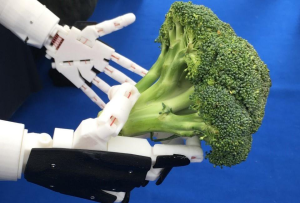
“Our ability to deliver this ambition is predicated on a modest increase in the workforce, but a much larger rise in productivity per worker through the use of innovative production and supply chain processes such as robotics,” said Martin.
“The aim is to create higher skilled, more productive and better paid food chain jobs which are a career of choice for school leavers and those already in the workforce.”
The LEP has also welcomed the report’s focus on management skills and the need to address the challenges of digitalisation. The food chain is a fast-paced sector in which the skills required to manage complex production processes are essential and likely to continue to grow.
The LEP has supported the University of Lincoln in developing a national role as a centre for digitalisation of the food chain at both the National Centre for Food Manufacturing in Holbeach and the Lincoln Institute for Agri-Food Technology.
“With industry demand for skills continuing to grow, we support the conclusions of this report which highlight the need for further investment in digital skills and the management expertise to apply these skills successfully,” said Martin.
Ursula Lidbetter OBE, Chair of the Greater Lincolnshire LEP, Chief Executive of Lincolnshire Co-op and a member of the Food and Drink Sector Council, said: “As Chair of the LEP and as the leader of a major food retailer I am only too well aware that the success of our food chain is critically dependent on the supply of talented people who can deliver growth in the industry.
“Greater Lincolnshire can be rightly proud of its food sector and its national leadership in food chain skills at the National Centre for Food Manufacturing. Our FE colleges are also working to upskill the food chain workforce by working with the NCFM which is leading on the creation of our new Institute of Technology.
“If we all work together I know that we can address the significant workforce and skills challenges which this report from the Food and Drink Sector Council highlights.”
Professor Val Braybrooks MBE, Dean of the National Centre for Food Manufacturing and a member of the Food and Drink Sector Council’s Skills Consultancy Group, said: “As the largest provider of training to the food processing industry NCFM welcomes this new report and its focus on innovative delivery methods, such as increasing the use of apprenticeships and food and drink-specific CPD, of the type we have been spearheading at NCFM.
“Our industrial partners and students are working hard to ensure the industry has the skills needed and the team at NCFM looks forward to working with them to implement the report’s recommendations.”
The Food and Drink Sector Council’s report, Preparing for a Changing Workforce, can be found here.
Notes for editors:
- Agri-food is the largest industry in Greater Lincolnshire, with high, growing levels of employment. It is an industry of national significance and the largest manufacturing sector in the UK.
- The pre-consumer food chain in Greater Lincolnshire (not including food retail and food service) supports 56,000 direct employees in agriculture, food processing, marketing and logistics, generating a GVA of over £3.1billlion in 2016.
- In an economy worth £17 billion, the sector generates 18% of local GVA against 3% nationally. The industry employs nearly 13% of the local workforce compared to 3.6% nationally. This makes Greater Lincolnshire the LEP with the greatest dependence on food processing and distribution.
- The industry contains just over 6,000 companies from SMEs to some of the largest companies in the international food chain. While agriculture is dominated by SMEs, the rest of the food chain has a diverse mix from small start-ups and specialist micro-producers to multinationals with thousands of employees, both those headquartered locally and plants owned by global companies.
- Greater Lincolnshire is different from other LEP areas in having significant strength at every stage of the food chain, from farming to food processing, marketing and logistics. In agriculture the LEP area produced £1.84 billion of crops and livestock in 2016, 11% of the English total. It had particular strengths in fresh vegetables with 30% of English production, 20% of sugar beet, 19% of poultry and 19% of ornamental plants and flowers.
- The National Centre for Food Manufacturing in Holbeach is the largest provider of degree and apprenticeship skills to the food processing sector in the UK and its Dean, Professor Val Braybrooks MBE, was part of Food and Drink Sector Council’s Skills Consultancy Group which helped to produce the skills report.
- The Greater Lincolnshire LEP was set up in 2010 and works with businesses and local authorities to develop and grow Greater Lincolnshire’s diverse economy.
- It is a public / private partnership led by the private sector.
- It works with central Government and the private sector to invest in infrastructure, skills, innovation and productivity.
- More than 100 businesses are involved in its strategies, and 80 business people sit on its boards.
- The LEP has an ambitious and balanced strategic economic growth plan for Greater Lincolnshire.
- The LEP’s six priority sectors are agri-food, the visitor economy, manufacturing, logistics, health and care and low-carbon energy.
- The LEP has invested £307 million in local economic growth schemes in Greater Lincolnshire since 2014.
- The Greater Lincolnshire LEP covers an area including North Lincolnshire, North East Lincolnshire and the administrative county of Lincolnshire and is led by a LEP board made up of leading figures in the public and private sector.
- To find out more visit www.greaterlincolnshirelep.co…. or follow the LEP on Twitter @greaterlincslep, Facebook or Linkedin.
For media information, please contact: