How to Gain Coverage in the Trade Media
Our Director Jez Ashberry shares some tips on how to secure free editorial coverage in the trade media.
Getting editorial coverage that you’ve earned, not paid for, is like gold dust. Being talked about and written about by reputable journalists should be a key part of your overall marketing strategy; after all, a third-party endorsement in the media is worth so much more than an advert or a paid-for advertorial.
If you know the reporters on your local newspaper, radio station or news website, you should have no trouble achieving some valuable editorial coverage in your area. But the trade media that covers your industry or sector can be a tougher nut to crack.
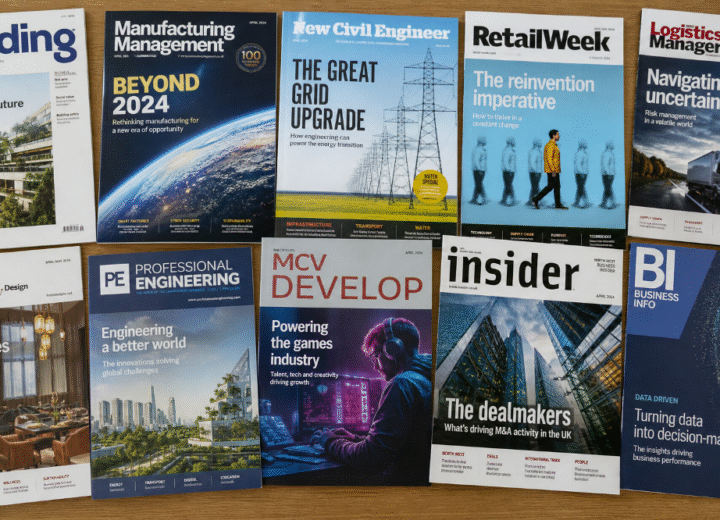
Getting your business mentioned in national media outlets that cover a specific industry (and are read primarily by people who work in that industry) can have a significant positive impact. They may have fewer readers than a national newspaper, but they may also reach more of your target audience and will almost certainly be more interested in what you have to say.
Coverage in trade media is also good for your search ranking. AI tools such as ChatGPT, Claude, Perplexity, and Google AI reward specialised knowledge and often prioritise niche trade publications over general news outlets when users ask industry-specific questions.
In B2B publishing, editorial opportunities are increasingly linked to commercial investment – if you can’t back your news release up with hard cash, it might get spiked. Editorial teams in the trade media have shrunk while workloads have increased, which makes it harder for businesses to get noticed. And by the nature of the national media, the chances are you’re a long way away from the editors and journalists that you want to cultivate, so inviting them out for coffee or lunch is not necessarily an option.
So how can small and medium-sized businesses get a foothold in the trade media and start generating coverage that will benefit their bottom line? Here are ten tips that should help.
Talk to the right people
Spend some time building a robust media list. Research the specific magazines and websites covering your industry sector and find out who the writers and the editorial decision-makers are.
Use personal email addresses for news editors and features editors rather than the generic inbox.
Actually read the publications you’re trying to appear in! Find their articles online or subscribe to the hard copy version, read their website’s About Us page, and get to know the subjects they like to cover, the tone of the coverage and their preferred story length.
All this takes time, but a thoughtful and targeted approach is always better than a scattergun news release emailed to 100 outlets.
Pitch something newsworthy
Not many editors will be interested in a cosy profile of your business; instead they are looking for relevant and newsworthy content. This could be new data, research or a survey; it could bea technological breakthrough or a unique solution to a specific problem; or it could be an outspoken or provocative opinion that you would like to share.
Bear in mind that most journalists are more interested in industry trends than product launches or new hires. What does your story tell them about the latest trends in your industry? What makes your product launch meaningful to that outlet’s readers? Avoid self-promotion, and instead add value.
Understand the editorial calendar
Most trade media outlets plan a year ahead and publish their editorial calendar at the start of the year. Ask for these calendars or find them online – they’re often include in the media pack for advertisers – and use them to build your own editorial schedule that fits your business. If you make nuts and bolts for jet aeroplanes, plan to pitch a story to Aerospace Engineering magazine in June in plenty of time for their feature on nuts and bolts in September.
You don’t need to write an article or a news release right away. If you know what features are coming up you can get in touch ahead of time to offer a contribution or ask how you can get involved. If they’re interested, the journalist might ask you to write a 500-word article, answer some questions over email or interview you on a particular topic.
Send your pitch in plenty of time – email the relevant editor with your idea well before the deadline. And be reliable: if an editor asks for an article, quote or images by a specific date, make sure you deliver on time. Missing a deadline means losing your spot, and you might not be trusted to deliver in the future.
Build long-term relationships
There’s no substitute for personal relationships. Once you’ve got to know your journalist and gained their trust, you’ll find it much easier to pitch ideas to them and gain positive coverage.
It may sound old-fashioned, but phone calls and Teams meetings can help to build this relationship better than emails. If you can meet the journalist in person, say at a trade show or conference, your relationship will undoubtedly benefit.
Use social media to maintain your relationship: reply to their business-focused posts on Linkedin and like their holiday snaps on Instagram.
And if you get some good coverage, a quick thank-you can’t hurt – and sharing the thank-you on social media is even better!
Send good images
Magazines and websites are visual, so image quality is important. Low-resolution photos might suffice for online stories but print publications need high-resolution images files saved at 300dpi (dots per inch).
These days your smartphone has probably got a good enough camera if you can’t afford a professional photographer, but spend some time getting the shot right: make sure it’s well lit, in focus, free of distracting items like bins or traffic cones, and relevant to the story you’re pitching.
The more images you send, the better the chance your story will be given a decent-sized space in the magazine.
Use social media
Social media platforms, especially LinkedIn, are useful for finding and connecting with journalists. The hashtag #journorequest is still used on X by journalists looking for expert comment or information, and social media is a great way to connect with reporters and editors and pitch your ideas.
Offer an exclusive
If you’ve got a juicy story and you want to attract the interest of a particular outlet, you can always offer your story on an exclusive basis. Beating your rivals to a big scoop is still a notion that appeals to ultra-competitive journalists.
If you do offer exclusivity, it doesn’t mean that you can’t give your story to anyone else – only that you’ll have to wait for a respectable period after your preferred outlet has run the story. So make sure you don’t accidentally send it far and wide before you intended to, and be careful not to put other editor’s noses out of joint by showing favouritism!
Keep it simple
Bear in mind that journalists don’t always need to be presented with a complete story on a plate. Yes, they are pressed for time these days, but often the germ of an idea will be enough and they can take care of the rest.
Don’t be afraid to send a one-line email outlining the essence of your story idea and asking if they would like to follow it up. You might feel too busy to write a news release or a 600-word article, but sometimes the best stories come from a short email or phone call.
Always be responsive and ready to help out – if the journalist follows up your idea and finds that you’re not available or you’ve gone on holiday, you’ll have missed a golden opportunity and you’ll have less chance of success next time.
Sometimes you have to pay
Ideally you’ll be able to get some editorial coverage in your target outlets without having to pay for it. But working with the advertising teams on trade publications is not a bad thing – in fact, the sales team are often the gatekeepers that you have to get past in order to reach the editor.
Cultivate your relationship with the advertising staff just like you do with the editorial team. Take their calls and discuss future editorial opportunities with them. Unlike reporters and editors, salespeople are usually happy to chat.
Sometimes you might have to pay for an ad or some advertorial, but in most cases this will make you more likely to succeed when you’re pitching a story that you don’t want to pay for.
Invest time
This all sounds like a lot, doesn’t it? Well, it is a lot. Achieving positive third-party editorial coverage in trade publications and magazines relevant to your business is hard, and it’s time-consuming. But it’s well worth the effort.
It can be a slow process: from initial outreach to publication can take three months or more. It’s definitely not a quick fix. But the more consistently you work at it, the stronger the results will be.
If you’re willing to put in the hard yards, work constructively with journalists and not expect miracles overnight, you will invariably succeed.
And if you really haven’t got the time, perhaps you should talk to a PR and marketing agency like Shooting Star who can do the work on your behalf. JA